Falk, CA: The Ghost Town the Redwoods Reclaimed
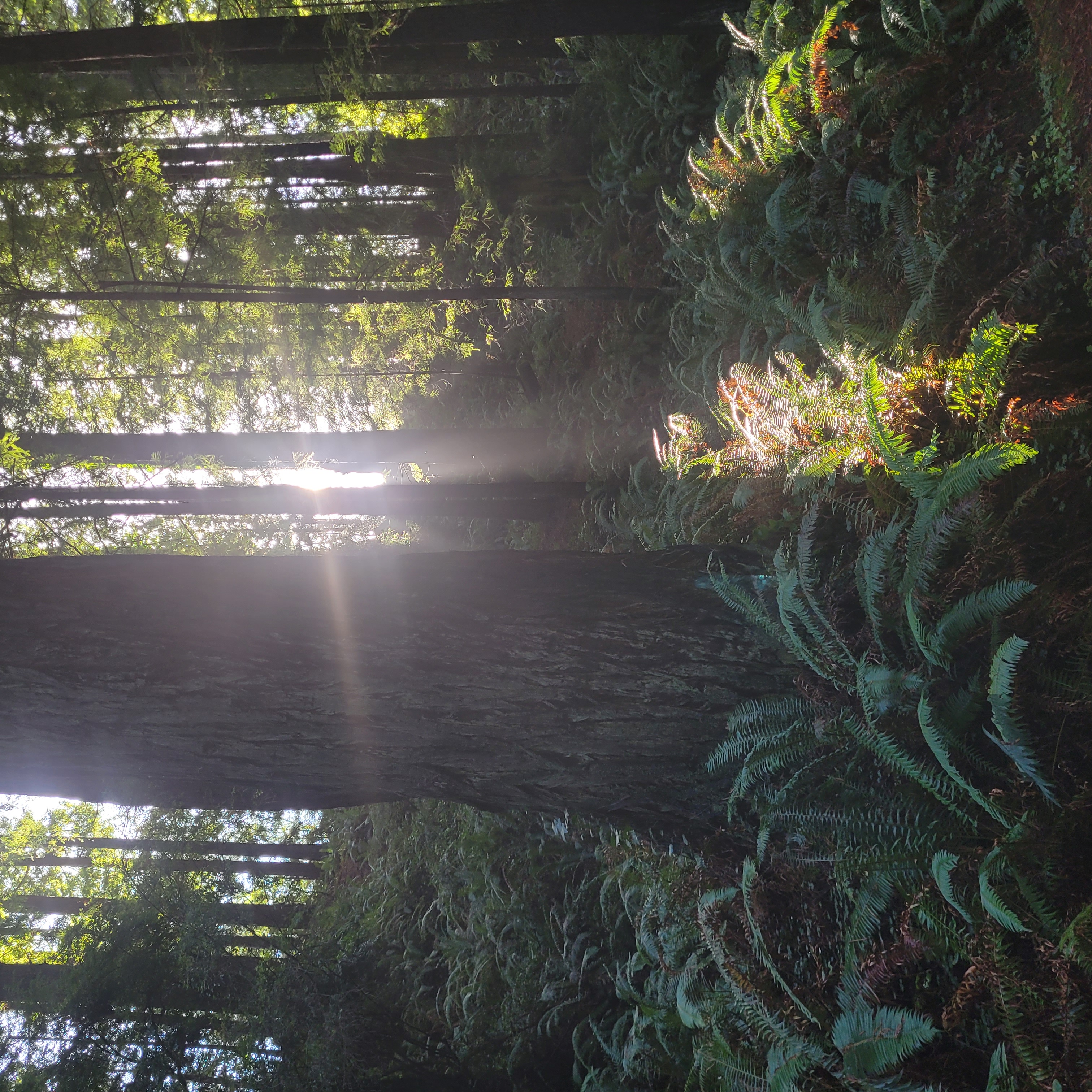
Falk was once a thriving company mill town of 400 people just south of Eureka, complete with its own railroad, school, and post office, before the Great Depression closed its mill in 1937 and the surrounding forest slowly reclaimed it. Today, the site sits within the Headwaters Forest Reserve, where the first mile of the Elk River Trail winds past interpretive signs, old foundations, and a restored locomotive roundhouse now serving as an education center. Adventurous hikers can continue past the townsite on a 10.5-to-11-mile round trip to a genuine old-growth redwood grove, while those short on time can take in Falk's haunting history in just an hour. Recently added to the National Register of Historic Places, Falk offers a rare, quiet window into Humboldt County's timber-era past.
Six miles southeast of Eureka, tucked into the Headwaters Forest Reserve along the South Fork Elk River, sits the site of a town that doesn't exist anymore — and hasn't for nearly a century. Falk was once home to 400 people, a working mill, its own railroad, and enough infrastructure to support a genuine working community. Today, walk the first mile of the Elk River Trail and you'll find old building foundations poking through the moss, and trees planted by residents who never imagined the forest would eventually swallow everything they built. It's one of Humboldt County's most atmospheric and least-visited pieces of history, and it's an easy, rewarding stop for anyone willing to make the short drive south of town.
From gold fields to redwood gold
Falk owes its existence to Noah Falk, who left Ohio for California at 18 during the Gold Rush and, like plenty of prospectors before him, found that lumber paid off more reliably than gold ever did. He worked mills in Mendocino and then for William Carson's company in Humboldt starting in 1867, eventually co-owning two Arcata mills with Isaac Minor. By the 1880s, as the easily reached timber near Humboldt Bay ran out, logging pushed further inland — and Falk followed it. Taking advantage of the Timber and Stone Act, he reportedly acquired 160-acre parcels along the South Fork Elk River for $2.50 an acre, partnered with a couple of San Francisco investors to form the Elk River Mill and Lumber Company, and brought his brothers Elijah and Jonas out from Ohio to design and run the mill. In 1884, the company town of Falk was officially founded.
A real town, not just a camp
Falk grew into something far more substantial than a rough logging outpost. At its peak the town held around 400 residents and came equipped with a post office, cookhouse, school, general store, dance hall, and its own railroad — the Bucksport and Elk River Railroad, which connected Falk to the town of Bucksport and carried lumber onward to markets around the world via the port at Eureka. A mill pond and surrounding work camps kept the operation running for over five decades, one of many small, self-contained mill towns that dotted the redwood coast during an era when heavy industry still needed to build its own communities from scratch to reach the timber.
Falk's decline tracked almost exactly with the Great Depression's toll on the timber industry, and the mill officially closed in 1937, though a handful of residents lingered a few more years. As cars made it possible for workers to commute from Eureka instead of living on-site, the need for isolated company towns like Falk was already fading before the economic collapse finished the job. The forest moved back in quickly. By the time young adventurers and relic hunters started finding their way to the crumbling site, Falk had become a genuine ghost town — buildings shaggy with moss, ferns growing through sagging floorboards, saplings pushing up through what had once been a busy town center. The remaining structures were finally demolished in 1979, and for years afterward, only a few determined visitors knew the site was there at all.
What's there today
Falk's fortunes turned again in 1999, when a decade-long conservation effort led the federal government and the State of California to purchase the surrounding 7,472 acres for $380 million, creating the Headwaters Forest Reserve to protect one of the last intact old-growth redwood ecosystems left in private hands at the time. Since then, more than 14 years of archaeological work by Humboldt State University (now Cal Poly Humboldt) has uncovered hundreds of artifacts from the site, including excavations of the old engine house and a bachelor's cabin — work detailed enough that the Falk Archaeological District earned a spot on the National Register of Historic Places in 2024.
Today, the Elk River Trail's first half-mile is lined with interpretive signs marking what remains of the town, and if you look closely you can still make out building foundations, old pipes rising from the ground, and the yew trees Falk's residents planted generations ago — all of it slowly fading back into second-growth forest. The centerpiece is a full locomotive roundhouse reimagined from the original mill operation, now home to the BLM's Headwaters Education Center, open to the public on Sundays from noon to 3 p.m. between June and September, and stocked with many of the artifacts recovered from the site.
The old-growth loop
Falk isn't the only reason to make the trip. The Elk River Trail continues well past the townsite, following the South Fork Elk River for about three miles — paved and wheelchair-accessible for the first mile, open to bikes and leashed dogs for the first three — before climbing roughly two more miles through closed forest canopy to a short loop through genuine old-growth redwood. All told, it's about 10.5 to 11 miles round trip if you go the distance, with the last stretch climbing through moderately strenuous terrain; plan on roughly an hour and a half to two and a half hours each way for the flatter river section, and another two to two and a half hours for the push up to the old growth and back. If you'd rather not commit to the full haul, the first mile alone — paved, flat, and packed with Falk's history — makes for an easy, worthwhile visit on its own.
For a shorter but steeper alternative, the seasonal South Side Trail (open May through November, no dogs or bikes) connects with the Elk River Trail to form a 2.5-mile loop, and the reservation-only Salmon Pass Trail on the reserve's south side offers a 3-mile, docent-guided route through old growth for visitors willing to book ahead through Recreation.gov.
Why it matters
Headwaters Forest Reserve protects habitat for several threatened species, including the marbled murrelet, northern spotted owl, and coho and Chinook salmon, and the land remains part of the ancestral homeland of the Wiyot people, who continue to co-steward the landscape alongside the BLM. The reserve itself came out of one of Humboldt County's most contentious conservation fights, after a hostile takeover of Pacific Lumber Company in the 1980s put the last large stand of privately held old-growth redwood at real risk of logging — a fight that became a rallying point for environmental activists nationally before ending in the land's protection.
Planning your visit
Access the reserve from the Elk River Road exit off Highway 101 at the south end of Eureka, following Elk River Road about six miles to the trailhead parking area, which is open year-round. Give yourself at least an hour for the Falk townsite alone, and budget a full day if you're aiming for the old-growth loop. Bring water, expect muddy conditions in wetter months, and stay on the marked trail — the reserve's ecosystem is sensitive, and much of what's left of Falk is fragile enough that off-trail exploring does real damage. It's a quiet, moody piece of Humboldt history, easy to reach and easy to have almost entirely to yourself.
Frequently Asked Questions
It's mostly foundations, pipes, and interpretive signs rather than standing buildings — the last structures were demolished in 1979, so what remains is subtle and easy to miss without the trail signage guiding you.
About one mile in, along the paved, wheelchair-accessible first stretch of the Elk River Trail.
No, it's open to the public on Sundays only, from noon to 3 p.m., June through September.
No permit is needed for the Elk River Trail itself, though the Salmon Pass Trail on the reserve's south side requires an advance reservation through Recreation.gov for a docent-guided hike.
Yes, however, leashed dogs are allowed on the first three miles of the Elk River Trail, but not on the South Side Trail or Salmon Pass Trail.
Bikes are allowed on the first three miles, but not beyond that or on the South Side Trail.
Plan for a full day — roughly 5 to 5.5 hours round trip if you're doing the entire 10.5 to 11-mile route to the old-growth grove and back.
Yes, the seasonal South Side Trail (open May through November) connects with the Elk River Trail for a shorter 2.5-mile loop.
No, there's no fee to access the reserve or hike its trails.
The trail is open year-round, but expect muddier conditions in the wetter winter and early spring months — late spring through fall tends to offer the driest, most comfortable hiking.
You Can Always Ask Xander
Have more questions about this story or Humboldt County? Xander is here to help.
More Local Stories
Willow Creek, CA: The Beating Heart of Bigfoot Country
Shelter Cove, CA: A Treasure Worth Reaching For
Fortuna, CA: The Friendly City on the Eel River
Why Should You Visit Southern Humboldt During the Quiet Rainy Season?
Chasing Fog: How to Capture Humboldt Bay's Winter Magic with Your Camera