Sequoia Park: Eureka's Old-Growth Backyard
Sequoia Park is a 67-acre pocket of old-growth redwood forest tucked into a residential Eureka neighborhood, gifted to the city by the Glatt family in 1894. It's home to California's oldest zoo, founded in 1907 and once famous for its beloved resident Bill the Chimp, along with the popular Redwood Sky Walk, a suspended bridge system that lifts visitors 100 feet into the forest canopy. Beyond the zoo, the park offers miles of accessible trails, a duck pond, formal gardens, and the flowering Rhododendron Glen, all free to explore. It's one of Eureka's most complete green spaces — equal parts wildlife, history, and quiet old-growth forest, just minutes from downtown.
If you’ve ever flown over downtown Eureka in an airplane, you’ll notice a sprawling, rolling cityscape with one amazing feature: a ribbon of redwood forest running through it. Right in the middle of a residential Eureka neighborhood, minutes from downtown, sits 67 acres of redwood forest that has no business feeling as wild as it does. Sequoia Park is the rare city park built around genuine old growth rather than planted trees, and over more than a century it's grown into something unusually complete for its size — a zoo, a treetop walkway, formal gardens, duck ponds, miles of trail, and enough quiet forest to make you forget you're standing inside city limits.
A gift from the Glatts
The land's story starts with logging, like most of Humboldt County's story does. Entrepreneur Joseph Russ bought up much of what's now Eureka in the 1800s and logged most of it, selling off parcels as he went. One of those parcels landed with Bartlin and Henrietta Glatt, German immigrants who'd made their way to Humboldt County by 1866. The Glatts logged part of their land and built a home among the redwoods that remained, raising a family there and growing genuinely fond of the trees still standing on their property. In 1894, that fondness turned into a gift: the Glatts donated 20 acres of virgin redwood to the City of Eureka, on the condition that the trees be preserved. The land was first called Forest Park before later taking the name it carries today.
A community gathering place from day one
Sequoia Park became an instant favorite among Eureka residents almost as soon as it opened. Family outings, group picnics, fraternal club events, concerts, and theatrical productions filled the park most weekends in its early decades, helped along by Eureka's electric trolley line, which extended all the way south to the park at a time when most families didn't yet own a car. School May Day celebrations and summer camps were held there, and local Scout troops pitched in on cleanup and construction projects over the years. A bandstand and playground went up on the flatter east end, a retired logging train engine sat on display for decades, and the neighboring Sequoia Tavern and Sequoia Auditorium hosted dances and, later, roller skating. In 1989, the park's entrance was marked with a grand redwood gate salvaged from the old Holmes Eureka mill when it was torn down to make way for the Bayshore Mall — a fitting bit of recycled timber history for a park built on preserved trees.
Sequoia Park Zoo: the oldest in California
The zoo opened at the park's western end in 1907, making it the oldest zoo in California and, today, one of the smallest accredited zoos in the country. It started small, mostly housing native species like elk and deer, before expanding to include an aviary and more exotic animals — bears, lions, camels, and eventually, most famously, chimpanzees. The zoo's best-known resident may have been Bill the Chimp, purchased from a traveling circus in 1957 after local schoolchildren pooled their coins to buy him. Bill lived at the zoo for decades, became something of a local celebrity, and reportedly kept up a finger-painting habit well into his sixties.
Today the zoo sits on about five to six acres, home to more than 150 animals across roughly 50 species, including red pandas, river otters, bald eagles, spider monkeys, and a walk-in aviary, plus a barnyard petting area for younger visitors. It earned accreditation from the Association of Zoos and Aquariums in 1995 and remains a genuinely intimate experience — small enough to see in an hour or two, but packed with more variety than its footprint suggests.
The Redwood Sky Walk
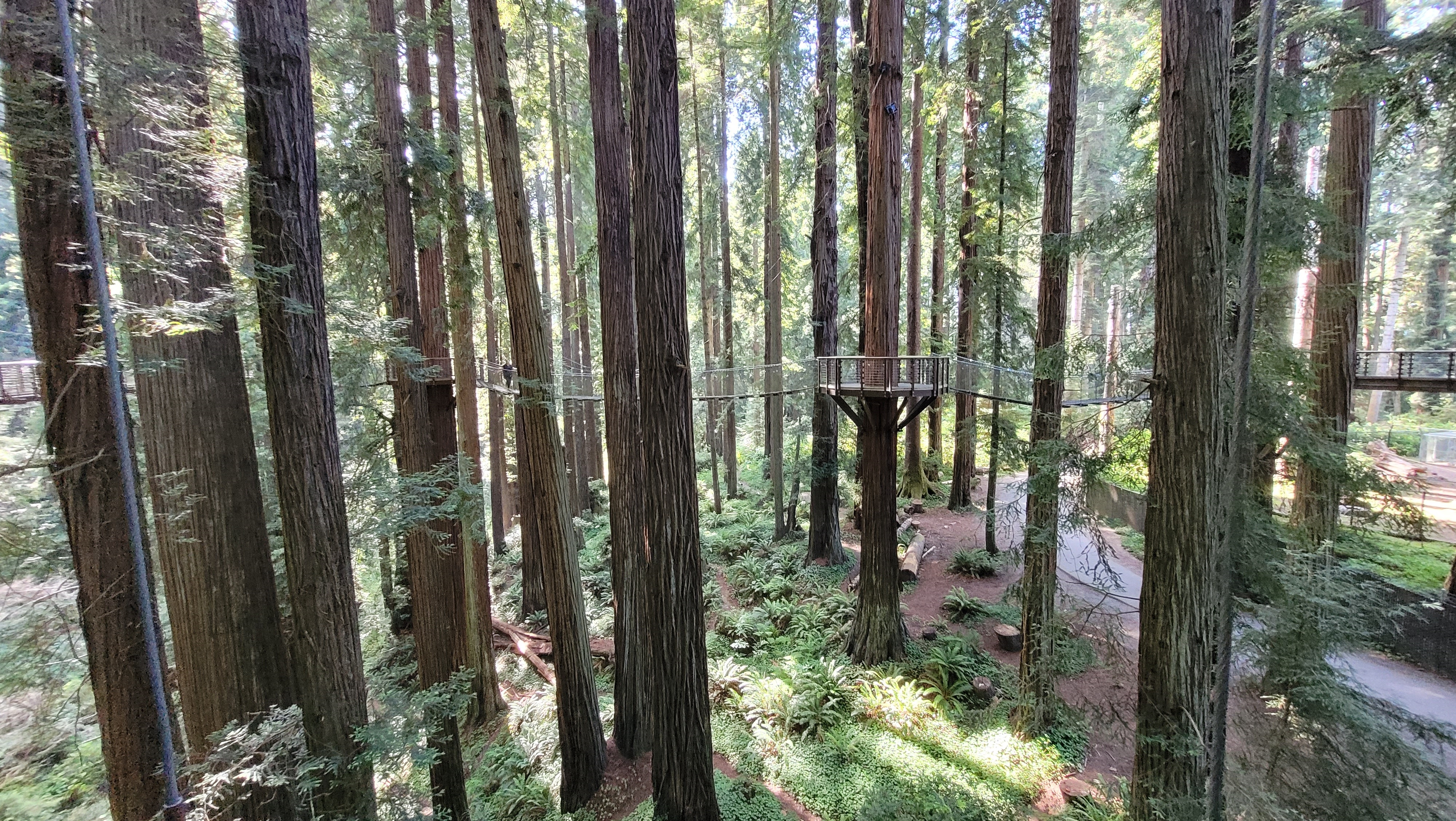
The zoo's biggest draw in recent years has been the Redwood Sky Walk, a quarter-mile of suspended bridges, ramps, and viewing platforms that opened in 2021 and lifts visitors as high as 100 feet above the forest floor. It's a self-guided interpretive experience threading directly through the canopy of the park's redwoods — not tall enough to reach the very top of a coast redwood (which can top 320 feet), but plenty high enough to walk among branches usually seen only by researchers and birds. Funded in part by a Land and Water Conservation Fund grant, it's become one of Eureka's signature attractions and a genuinely rare way to experience an old-growth forest at eye level.
Gardens, ponds, and trails
Just outside the zoo's northern edge, the Sequoia Park Garden offers a bright counterpoint to the shaded forest — a collection of dahlias and other blooms tended for years by City Parks Master Gardener Jody Daigneault, complete with a wishing well and a gazebo used for small gatherings and events. Deeper into the park, Rhododendron Glen holds one of the park's most photographed corners, a network of trails winding past small waterfalls and dense stands of rhododendron that bloom into color each spring.
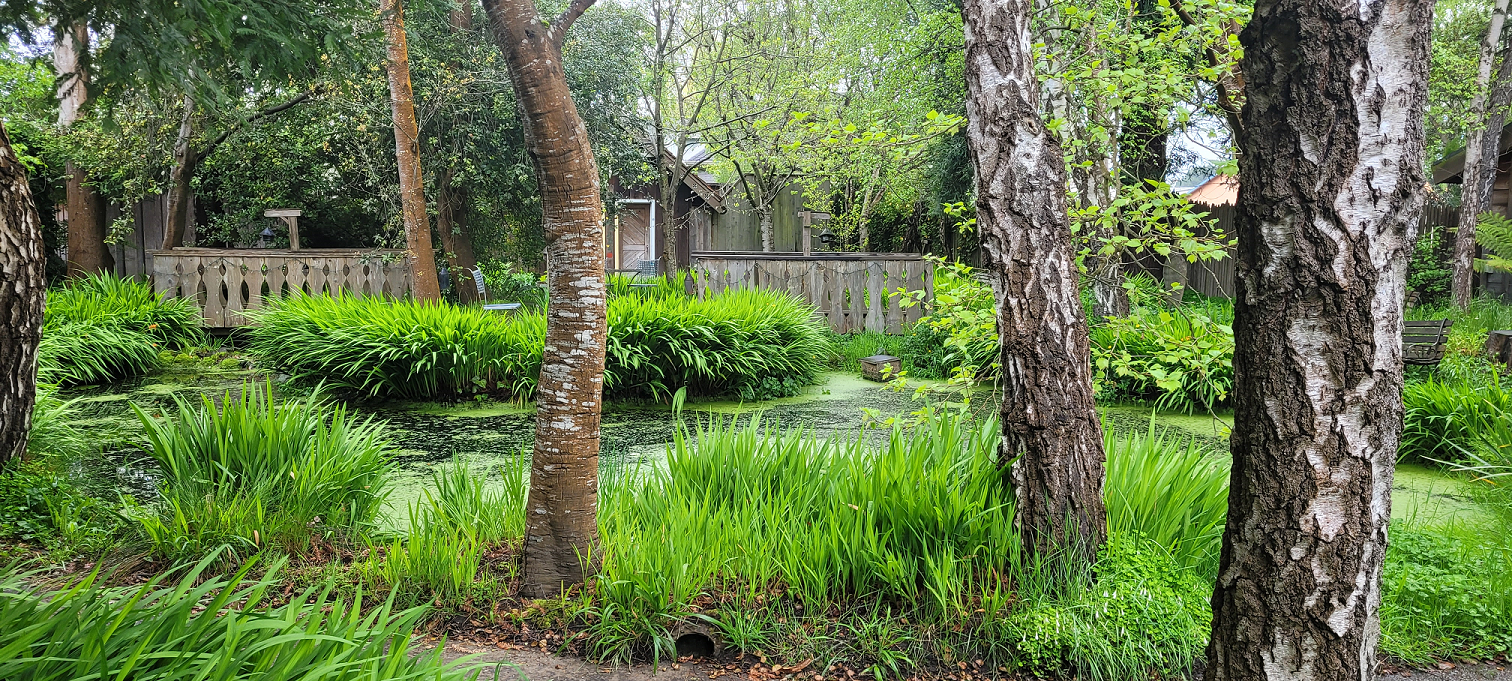
Beyond the gardens, Sequoia Park holds over a mile of wheelchair- and stroller-accessible paved trail, including an old maintenance road that runs through the forest behind the zoo and the Sequoia Creek Trail, which heads west from the park's duck pond through open meadow before looping back along a forested creek. Unpaved side trails branch off through the Rhododendron Glen and elsewhere, some quiet enough to feel genuinely forgotten, leading past small creeks and even the stone foundation and fireplace of a long-abandoned home tucked into the trees. Two playgrounds, open turf areas, picnic tables, restrooms, and a group picnic area round out the park's everyday amenities, and natural clearings throughout make it a popular, low-key spot for small ceremonies and events.
Planning your visit
Sequoia Park costs nothing to enter and sits close enough to downtown Eureka that it's easy to fold into a half-day of sightseeing alongside Old Town or the Carson Mansion. Budget an hour or two for the zoo and Redwood Sky Walk if you're going in, and add another hour to wander the Rhododendron Glen and creek trails at a slower pace — spring is the best time to catch the rhododendrons and garden in full bloom. Whether you're there for the animals, the treetop walk, or just a quiet loop through redwoods you didn't expect to find in the middle of a neighborhood, Sequoia Park is one of Eureka's best preserved gems in the city that never quite let go of its forest roots.
Frequently Asked Questions
No, the park (trails, gardens, playgrounds) is free to enter — only the zoo and Redwood Sky Walk require admission.
Access to the skywalk is included with zoo admission, since it's part of the zoo's grounds and experience.
Yes, it's a compact, easy-to-navigate zoo with a barnyard petting area, making it manageable for young children without the long walks bigger zoos require.
Dogs are generally welcome on the park's outdoor trails, though they're not permitted inside the zoo itself — check current posted rules, as some trail sections may have restrictions.
Yes, over a mile of paved trail throughout the park is wheelchair and stroller accessible, including the main maintenance road and Sequoia Creek Trail.
Rhododendrons bloom in the late spring, making that the best time to visit for peak color.
Yes, the group picnic area and gazebo are available for rental — contact the park directly for booking information.
Plan on one to two hours for a relaxed pace through both.
Yes, there is a designated parking lot located near the main entrance, with additional on-street parking available.
Yes, it's just a few minutes' drive from Old Town Eureka, making it easy to combine with other downtown sightseeing.
You Can Always Ask Xander
Have more questions about this story or Humboldt County? Xander is here to help.
More Local Stories
Shelter Cove, CA: A Treasure Worth Reaching For
Blue Lake, CA: More Than Meets the Eye on Highway 299
Why are Trinidad’s Winter Coastal Walks the Ultimate North Coast Adventure?
How Can You Experience the Best of Eureka’s January Arts Alive?
Chasing Fog: How to Capture Humboldt Bay's Winter Magic with Your Camera